


3 Tips for a Good Optical Connection

Before talking about a good optical connection, let’s briefly review how fiber optics work, what causes performance loss, and then define what a good optical connection is along with the essential tips to achieve it. Check it out!
Fiber optics is a glass filament used as a high-performance conductor, transmitting light, images, and data over distances of up to 20 km.
It consists of a central cylindrical core made of pure glass with a higher refractive index, surrounded by a layer of material with a lower refractive index.
Why is fiber so efficient in data transmission?
When a light beam is launched into the fiber, it travels through the core by continuously reflecting within the filament. The natural behavior would be for the light to reflect and gradually lose strength due to refraction. However, the lower refractive index of the cladding—usually made of acrylate—ensures total internal reflection. As a result, there is virtually no signal loss along the path. In summary, fiber operation is, in principle, highly efficient.
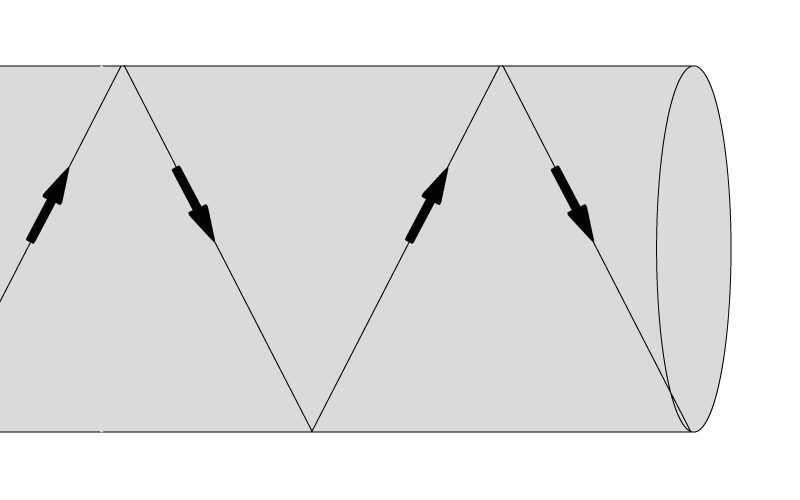
With its growing use in the telecommunications market, fiber optics has become widely adopted. However, sometimes the optical signal does not deliver the expected power. This happens because, during repairs or terminations in residential or field environments, connections between fibers of different diameters and classifications are required. These connections can interfere with performance, as they depend heavily on human execution.
But there are 3 basic tips to ensure a good optical connection:
physical contact between fibers, connector cleanliness, and fiber alignment.
1 – Physical contact
The first basic principle is that the fiber end faces must be in full physical contact. This means that without a proper cleaving process, the fibers will not align perfectly. Even if it is not visible to the naked eye, a fiber cleaved at a perfect 90-degree angle while another has just a 1-degree deviation will not achieve proper contact. For reference, a 1-degree angle error can cause around 1 dB of loss, and each additional degree increases the loss further. That is why a high-quality cleaver is essential for a proper fiber splice.
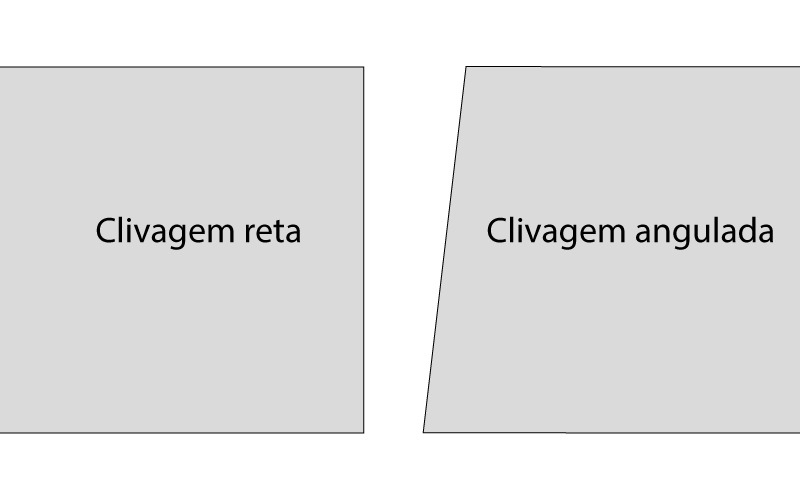
(If we apply this concept to connectors, it is like trying to connect an APC connector with a UPC connector—both are incompatible due to lack of proper physical contact.)
2 – Connector cleanliness
Even with perfect physical contact, cleaning the connectors is another decisive factor for a good optical splice. Why? A single particle on the fiber core can cause significant return loss, insertion loss, or even damage to the equipment.
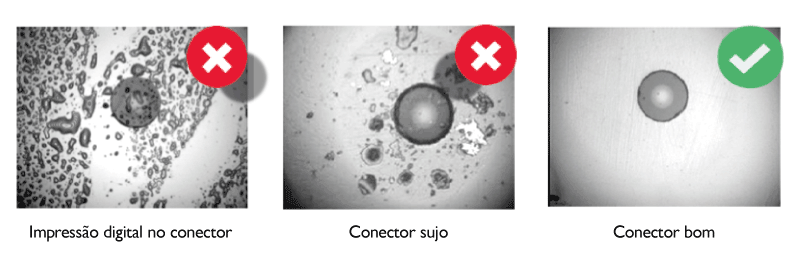
Fonte: Furukawa
The “contamination” may be dust or even a fingerprint. Therefore, during connectorization and/or splicing, technicians can use lint-free wipes with isopropyl alcohol or optical cleaning pens to remove any residues.
3 – Fiber alignment
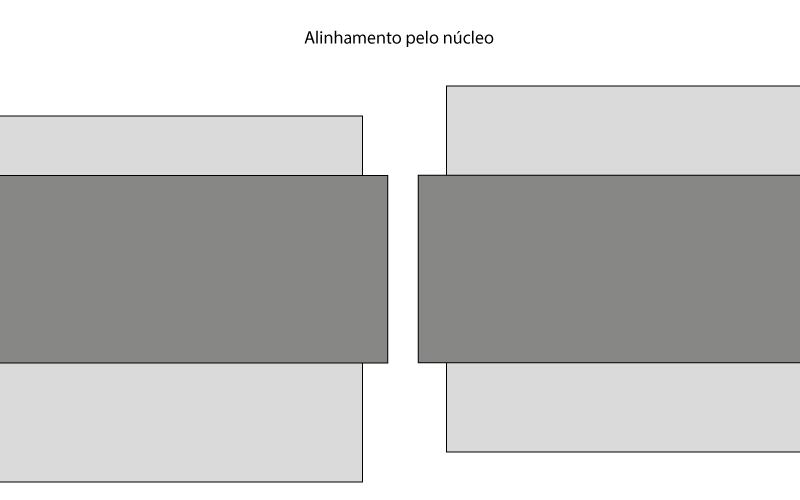
There are two types of fusion splicing machines: cladding alignment machines and core alignment machines. The issue with cladding alignment is that if there is any irregularity and the fiber is not perfectly centered within the cable, there is a high risk of breaking the first principle mentioned above: proper physical contact.
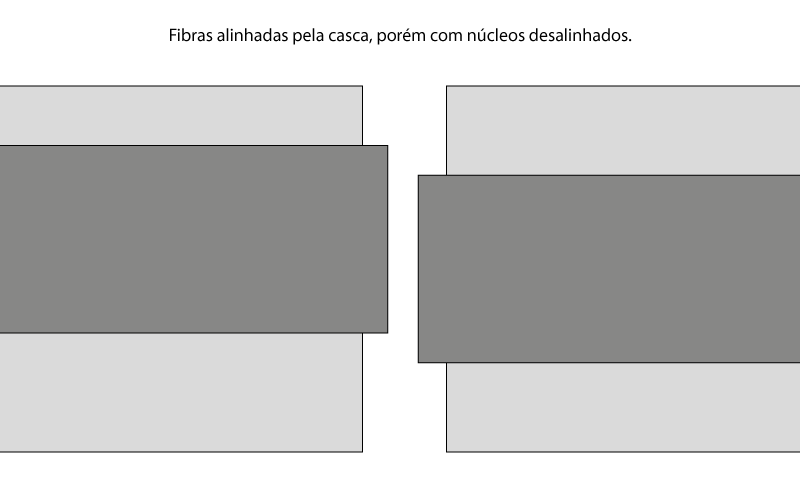
On the other hand, core alignment splicing machines perform automatic centralization. This means that even if the cable has minor imperfections, the machine can correct fiber alignment, ensuring better physical contact and, consequently, lower reflection losses.
Share on Social Media

Read more posts

The Importance of Sustainability in a Data Center
Read now
Learn more about WISPOT’s smart Wi-Fi
Read now
Learn about the advantages of operating with integrated systems using the Laserway solution.
Read now

DCA and Syma Provide Real-Time Connectivity and Monitoring at Show Rural
Read now

GPON Technology and Connected Businesses
Read now
Industrial Connectivity Solutions
Read nowTransform your infrastructure into a strategic advantage.
 4007-2977
 (41) 3021-1728
 contato@dca.com.br


DCA - Delta Cable Americas 2026. All rights reserved. | CNPJ 00.111.511/0001-80
Developed by

