


Types of Cables and Their Behavior in Relation to Flames
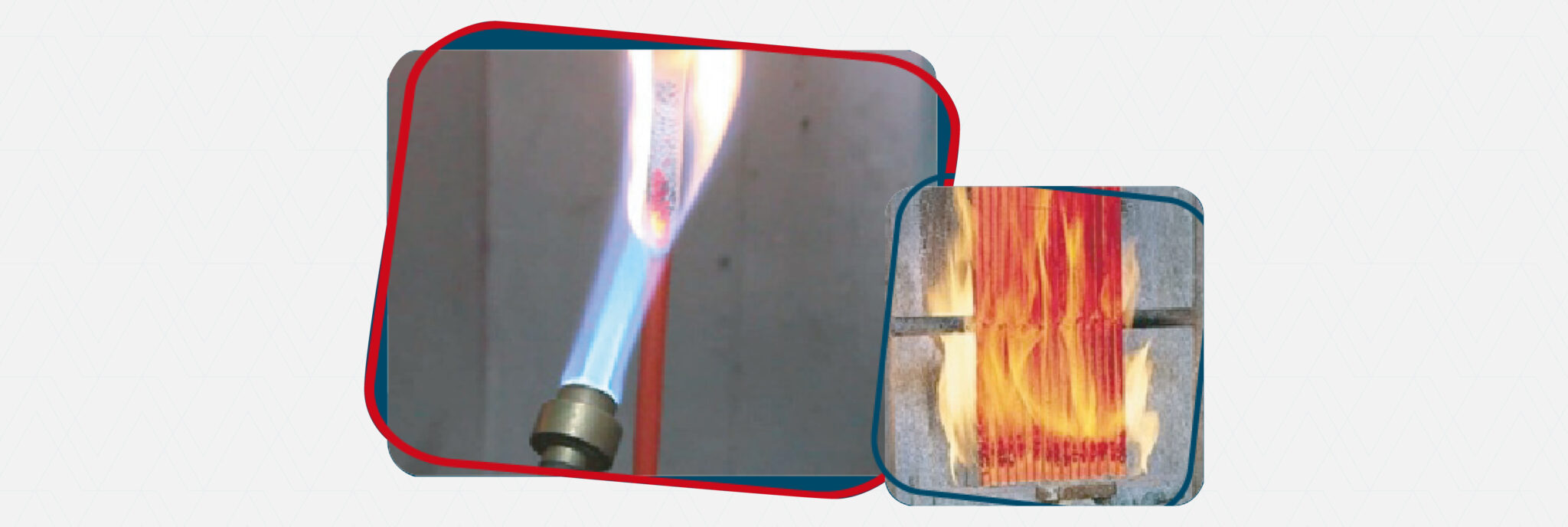
Cable safety is a key factor when choosing products. Cables designed with flame-retardant properties aim to prevent fire propagation, ensuring the safety of people and protection of equipment. Choosing the right type of cable for a project is essential for protecting and building reliable infrastructure. Therefore, it’s important to understand the applications and flammability characteristics of the cables used in a network infrastructure.
In general, internal cables are classified according to their behavior when exposed to flames. To help identify the parameters that determine this behavior, the following elements are considered:
- Flammability
- Smoke Generation
- Toxic Gas Production
- Smoke Corrosivity
Selecting the proper cable type is crucial for protecting or constructing structured cabling infrastructure. The classifications below clarify the flammability characteristics and typical applications of various cables.
CMX – Metallic Cable (Specific Use)
Recommended for metallic conduit applications with low cable density and no forced air flow. Exposed length should not exceed 3m, with a maximum cross-sectional dimension of 6.35mm. For CMX cables, vertical flame propagation is assessed, but smoke density and combustion gases are not evaluated. CMX cables offer limited flame protection and are not recommended for open tray installations.
COG / CM – General Optical / Metallic Cable
General-use metallic (CM) or optical (COG) cables are suitable for vertical applications in conduits with high occupancy, no forced air flow, or conditions where fire propagation may occur. Vertical flame propagation is evaluated, but combustion gases and smoke density are not. These cables are generally used for commercial internal installations and require conduit installation in areas without forced airflow.
COR / CMR – Optical / Metallic Riser Cable
Riser cables (COR optical or CMR metallic) are intended for vertical installations in shafts, multi-floor runs, low-occupancy conduits, or fire-prone areas. Vertical flame propagation is assessed, but combustion gases and smoke density are not.
COP / CMP – Optical / Metallic Plenum Cable
Plenum cables are intended for horizontal applications in confined spaces (between floors, ceilings, trays, etc.) with or without forced airflow. They are insulated with fluoropolymers (FEP), halogen-free, and often used in HVAC ducts. Plenum cables are widely used in the American and Canadian markets.
LSZH – Low Smoke Zero Halogen Optical Cable
In a fire, smoke containing toxic gases is more harmful than fire itself. LSZH cables were developed to minimize these risks, producing low smoke and zero halogen gases during combustion, improving evacuation safety. LSZH cables are recommended for high-occupancy areas such as commercial buildings, airports, hospitals, metro stations, and train stations.
LSZH-1
To be classified as LSZH-1, internal cables are tested for vertical flame propagation, smoke density, and gas toxicity. They are suitable for metallic conduit applications with low cable density, with or without forced airflow, and exposed lengths under 3m with a maximum cross-sectional dimension of 6.4mm, in areas with high foot traffic.
Key Considerations
CMP/COP, CMR/COR, CM/COG, and CMX cables contain halogens, which are stable under normal conditions. However, during combustion, they emit dense, toxic, and corrosive smoke that is harmful to infrastructure and human health. Dense halogen smoke also blocks light, obstructing emergency exits and hindering evacuation.
For high-occupancy spaces—such as commercial buildings, malls, theaters, cinemas, supermarkets, sports arenas, hotels, bus stations, train and metro stations, airports, hospitals, schools, universities, exhibition centers, and data centers—LSZH (LSZH-1) cables are recommended for general use. They emit low smoke, no toxic gases, and offer a safer option for people and infrastructure.
At DCA, we offer the best structured cabling solutions to meet your specific needs. Contact our sales team to learn more bout our offerings.
Share on Social Media

Read more posts



Transform your infrastructure into a strategic advantage.
 4007-2977
 (41) 3021-1728
 contato@dca.com.br


DCA - Delta Cable Americas 2026. All rights reserved. | CNPJ 00.111.511/0001-80
Developed by

